
Regardez sur YouTube cette vidéo explorant « masturbate »
Plongée dans « masturbate » avec DR. NORA HAYES
DR. NORA HAYES vient de rendre publique cette vidéo sur YouTube
focalisé sur « masturbate »:
Selon nos constatations, cette vidéo générait du trafic. Le nombre de Likes indiquait: 403.
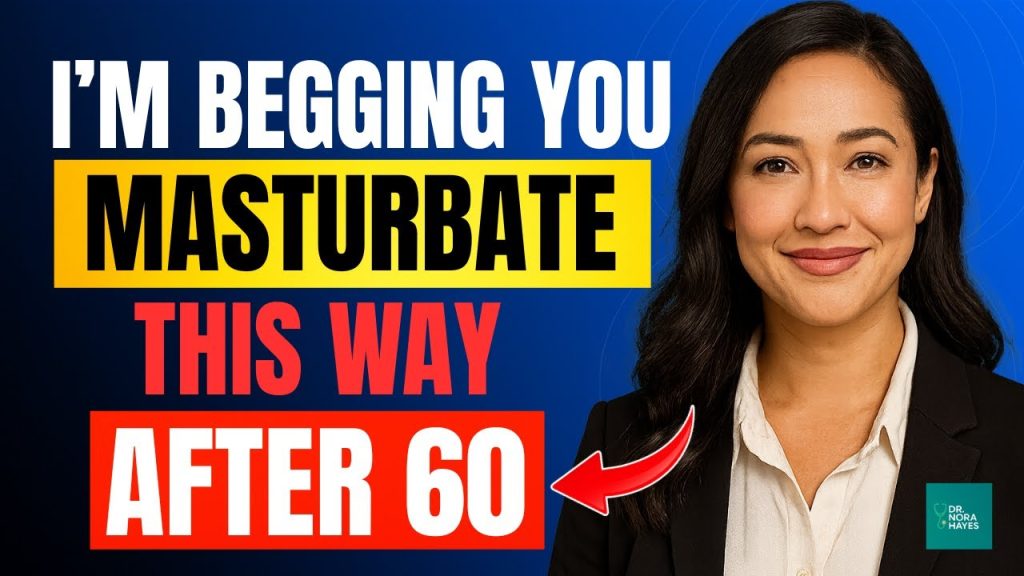
La vidéo dure 00:07:40 secondes, porte le titre Urologist Explains How to Masturbate Safely After 60 & When to Seek Medical Help – Men’s Health et provient de [vid_author_name]. La description qui suit mérite également votre attention :« À mesure que les hommes vieillissent, les changements dans la circulation, les hormones et la sensibilité peuvent rendre le plaisir personnel différent – et parfois même inconfortable. Dans cette vidéo éducative, la Dre Nora Hayes, urologue agréée avec plus de 7 ans d’expérience clinique, explique comment se masturber en toute sécurité après 60 ans, les meilleures façons de protéger votre prostate, de maintenir une circulation sanguine saine et de savoir quand consulter un médecin. Il s’agit d’une discussion médicale et éducative, et non d’un contenu sexuel ou explicite. L’objectif est d’aider les hommes âgés à comprendre leur corps, à prévenir les blessures et à maintenir une confiance sexuelle saine à mesure qu’ils vieillissent. Le Dr Hayes explique comment les changements dans la prostate, les niveaux de testostérone et la sensibilité nerveuse affectent la performance masculine et propose des conseils sûrs et fondés sur des preuves pour maintenir l’intimité et la santé sans risque. Vous apprendrez également :  Les techniques les plus sûres pour les hommes de plus de 60 ans Comment protéger sa prostate pendant l’autostimulation Quand s’arrêter et consulter un médecin À quelle fréquence est-ce trop souvent ? Des habitudes quotidiennes simples qui soutiennent l’endurance, la confiance et le bien-être sexuel à long terme. Cette vidéo fait partie de notre série d’éducation sur la santé des hommes — créée pour informer, responsabiliser et guider les hommes vers une vie plus saine et plus confiante.
  Si vous trouvez cette vidéo utile, veuillez AIMEZ, ABONNEZ-VOUS et activez la cloche de notification
  pour les informations hebdomadaires sur l’urologie et la santé masculine du Dr Nora Hayes.
  AVERTISSEMENT Cette vidéo est uniquement à des fins éducatives et informatives. Il ne contient aucun contenu sexuel, explicite ou graphique. Les informations sont fournies par un véritable professionnel de la santé agréé (Dre Nora Hayes) et sont représentées par l’IA uniquement pour la clarté visuelle et vocale. Nous ne promouvons ni n’encourageons aucune activité explicite, et le seul objectif de la vidéo est d’éduquer les hommes adultes sur des pratiques de santé sûres et adaptées à leur âge. Consultez toujours votre médecin avant de modifier votre routine de santé personnelle. ».
Grâce à sa vaste audience, YouTube permet aux utilisateurs d’explorer une multitude de thématiques tout en garantissant un espace où le respect des autres et l’anonymat sont préservés. C’est une plateforme qui facilite la découverte et le partage de vidéos qui engagent des discussions ouvertes et constructives autour des idées personnelles.
Mettre en place une stratégie pour cesser
Suggérer des techniques efficaces pour diminuer cette pratique
- Se fixer des objectifs précis : Utilisez des méthodes progressives ou participez au mouvement « nofap » pour une abstinence complète.
- Établir des objectifs de manière claire : Adoptez une approche progressive ou intégrez le « nofap » pour une abstinence complète.
- Se fixer des objectifs clairs : Optez pour une approche progressive ou participez au mouvement « nofap » pour un sevrage total.
Présenter un plan de prévention contre les rechutes
- Désactiver l’accès à la pornographie : Utilisez des filtres ou bloqueurs pour limiter l’accès aux contenus explicites.
- Mettre en place un emploi du temps clair : Remplissez chaque moment de votre journée avec des activités productives.
Montrer l’importance d’être entouré par une communauté de soutien
- Consulter un sexologue : Un spécialiste pourra proposer des stratégies adaptées. comme ce leader de la chasteté pour le monde entier.
- S’associer à des groupes de soutien : Partager vos objectifs avec d’autres peut renforcer votre engagement.
Appréhender les enjeux liés à la dépendance à la masturbation
Observer les manifestations d’une dépendance
Une personne qui se masturbe fréquemment peut ressentir une perte de contrôle, ce qui peut impacter négativement ses interactions avec son ou sa partenaire.
Analyser les transformations de la santé mentale et physique
L’excès de masturbation lié à , une perte de vitalité ou une insatisfaction dans la vie sexuelle.
Donner une définition claire de la masturbation et ses usages
La masturbation, perçue comme une pratique sexuelle naturelle, apporte souvent des bienfaits tels qu’une réduction du stress et une meilleure connaissance corporelle. Mais son excès peut conduire à des complications.
Masturbation et rapports intimes : relever le défi du changement
Pour certaines personnes, hommes et femmes, la masturbation est un acte naturel souvent associé à l’exploration de la sexualité. Toutefois, lorsque cette pratique prend le dessus et se mue en addiction, elle peut interférer avec divers aspects de la vie, rendant le processus d’arrêt particulièrement difficile.
Observer les avantages d’un sevrage réussi
Démontrer les étapes nécessaires pour un bonheur durable
Réduire la dépendance peut offrir des avantages à long terme dans les aspects personnels, professionnels et sociaux.
Montrer comment la santé mentale s’améliore au fil du temps
Abandonner cette habitude favorise souvent une plus grande énergie, une meilleure humeur et une concentration accrue.
Expliquer comment les interactions sociales deviennent plus harmonieuses
Les liens avec un partenaire se renforcent, créant une meilleure connexion émotionnelle et physique.
Examiner les éléments qui contribuent à l’expansion de cette pratique
Réfléchir au rôle de l’isolement et du désir
L’isolement et un désir non satisfait dans une relation ou dans la vie personnelle sont des éléments clés dans l’engagement dans cette pratique.
Étudier les éléments liés à la psychologie et aux émotions
Des facteurs tels que le stress, l’anxiété ou le manque de satisfaction dans d’autres sphères de la vie peuvent conduire à cette pratique habituelle.
Analyser les conséquences de la pornographie sur les comportements
La pornographie est un facteur significatif. Elle accroît fréquemment l’envie de se masturber et peut altérer la perception de la sexualité.
En conclusion
Cesser la masturbation instinctive est un processus lent mais réalisable. Un plan structuré et un soutien adapté permettent de surmonter ce challenge et d’atteindre une vie plus équilibrée, pleine d’objectifs plus enrichissants.
Utilisez ce lien pour regarder la vidéo sur YouTube :
le post original: Cliquer ici
#urologue #explique #comment #masturber #toute #sécurité #après #ans #quand #consulter #médecin #Mens #Health
Retranscription des paroles de la vidéo: What if the technique you’ve used for 40 years is now silently working against your health? Most older men never get taught how to adapt. They just continue doing what always felt familiar, faster, firmer, focused only on the end goal. But after 60, your body changes. And if you don’t change with it, what once felt good can now lead to discomfort, frustration, and even long-term harm. The truth is, the wrong technique can quietly damage your circulation, reduce nerve sensitivity, and chip away at your confidence more than you realize. Today, we’re going to fix that together. But before we dive in, a quick invitation. If you care about your health, confidence, and vitality as you age, make sure you hit that subscribe button and give this video a like so more men can get this life-changing information. And let me know in the comments, where are you watching from? I love seeing this community of men from all over the world supporting one another. I’m Dr. Sarah Wells, a board-certified urologist with nine years of experience helping men over 60 maintain safe, healthy, and confident sexual lives. And in this video, I’ll walk you step by step through how to adapt your self-touch routine in a way that protects your body, respects its changes, and supports your pleasure and health for years to come. Let’s start with the most important truth. You are not broken. So many men feel surprised, confused, or even ashamed when their bodies don’t respond the way they used to. But this isn’t failure. It’s biology. As we age, testosterone slowly declines. That doesn’t mean desire disappears, but it often becomes less spontaneous. Blood flow also changes. The small vessels that supply the penis can stiffen, making erections slower to build and harder to maintain, especially when you’re relaxed and alone. And nerves, they get quieter. sensations may feel muted and it can take longer for the brain to process touch. So what does this mean? It means the methods you relied on in your 20s, 30s, and 50s, the habits built over decades may no longer serve you. That’s not your fault. It just means it’s time to update your technique. Unfortunately, many men never realize this. Instead, they push harder. They grip tighter. They speed up. They focus only on climax, thinking that will fix it. But these old habits are actually working against you after 60. Let’s go through the five silent mistakes I see most often and how to avoid them. Mistake number one, using the same grip strength you’ve always used. After 60, the skin of the penis becomes thinner and more sensitive to friction. A strong grip can damage small blood vessels, desensitize nerve endings, and reduce your body’s ability to respond. The fix: loosen your grip. Think gentle, exploratory, not forceful. Your goal isn’t pressure, it’s sensation. Mistake number two, going too fast too soon. When your nervous system slows down, fast motion overwhelms it. The brain doesn’t register the signal properly, so pleasure feels flat. The fix: slow, steady, rhythmic movements allow your brain to process sensations more fully. Mistake number three, skipping lubrication. Testosterone decline means less natural lubrication. Combine that with thinner skin and dry friction becomes risky. It can cause micro tears, irritation, or soreness. The fix: Use a gentle, unscented, water-based lubricant early, not as an afterthought. Let it soften your skin and enhance sensitivity. Mistake number four, forcing yourself to climax. Climax isn’t the only measure of success. After 60, arousal often comes in waves, not a straight line. The more you pressure yourself, the more stress hormones interfere with pleasure. The fix. Let go of the stopwatch. Allow your body to set the rhythm. Satisfaction doesn’t have to mean climax every time. Mistake number five, ignoring your body signals. After decades of routine, many men go on autopilot. But after 60, the key is response, not repetition. The fix. If something feels dull, adjust. If something feels uncomfortable, stop. If something feels unexpectedly good, stay with it. So, what does a healthier self-touch routine look like? Let me walk you through it step by step. Choose your moment carefully. Block out 15 to 20 minutes where you won’t be rushed. Your nervous system must feel safe. Set the environment. Soft lighting, warm room, maybe calming music. Comfort is the foundation of pleasure. Start with breath. Before touching anything, take five slow breaths. In through the nose, out through the mouth. This signals to your body, I’m safe. I’m present. Apply lubricant early. Not after arousal, but at the start. Let warmth and moisture be part of the process. Explore slowly. Think of this as a massage, not a race. Try different pressures, rhythms, even hand angles. Pause when needed. If arousal fades, that’s okay. It may return or not. The goal isn’t performance, it’s connection. Breathe throughout. Breath keeps blood flowing and helps your body stay relaxed. Another overlooked factor, position. If you’re sitting hunched on a hard chair, you might be compressing pelvic nerves or restricting blood flow. Instead, try reclining with support behind your back, lying on your side, or elevating your legs slightly. Some men even benefit from warming sleeves or textured tools designed to provide sensation without force. These aren’t toys. They’re tools like glasses or hearing aids designed to support a changing body. Now, let’s talk about mindset. Because after 60, self-touch isn’t just physical. It’s emotional. Too many men carry silent expectations that it must look or end a certain way. That if it doesn’t, something is wrong. But the truth is, it’s not wrong. It’s different. Slower, softer, more about presence than performance. This isn’t a race. It’s not a test. It’s not about proving anything. It’s about reconnecting with your body in a new phase of life. Now, let’s be clear. Some changes are normal, but others may be signals that it’s time to talk to your doctor. Here are four signs to look out for. Persistent pain or discomfort during or after self-touch that doesn’t improve with lubricant. Sudden or ongoing numbness, especially sharp drops in sensation. Inability to get or maintain an erection even in calm private settings. emotional distress, anxiety, frustration, or shame linked to self-care. Talking to a urologist isn’t weakness, it’s wisdom. A quick check-in can give you clarity, reassurance, and simple next steps. So, let’s bring this all together. After 60, masturbation, or what I like to call intentional self-touch, isn’t about going back to what once was. It’s about moving forward with awareness. It’s about loosening your grip, slowing your pace, listening to your body, and letting go of outdated definitions of success. Because pleasure after 60 is not only possible. It can be deeper, calmer, and more meaningful than ever before. Remember this, your body is not broken. It’s evolving. And you deserve to evolve with it, not against it. If this video gave you clarity, do me a favor. Like this video, share it with a friend, and subscribe so you never miss the health advice that truly matters. And before you go, if you want to understand the one habit that silently affects your prostate health when you masturbate regularly, click here for my next video. You do not want to miss it. I’m Dr. Sarah Wells and I’ll see you .

Déroulement de la vidéo:
0.08 What if the technique you’ve used for 40
1.92 years is now silently working against
4.08 your health? Most older men never get
6.319 taught how to adapt. They just continue
8.16 doing what always felt familiar, faster,
11.2 firmer, focused only on the end goal.
14.0 But after 60, your body changes. And if
17.119 you don’t change with it, what once felt
19.119 good can now lead to discomfort,
21.039 frustration, and even long-term harm.
23.84 The truth is, the wrong technique can
26.0 quietly damage your circulation, reduce
28.32 nerve sensitivity, and chip away at your
30.64 confidence more than you realize. Today,
33.2 we’re going to fix that together. But
35.52 before we dive in, a quick invitation.
37.76 If you care about your health,
39.28 confidence, and vitality as you age,
41.52 make sure you hit that subscribe button
43.2 and give this video a like so more men
45.44 can get this life-changing information.
48.079 And let me know in the comments, where
50.32 are you watching from? I love seeing
52.399 this community of men from all over the
54.32 world supporting one another. I’m Dr.
56.64 Sarah Wells, a board-certified urologist
58.879 with nine years of experience helping
60.399 men over 60 maintain safe, healthy, and
63.039 confident sexual lives. And in this
65.04 video, I’ll walk you step by step
66.72 through how to adapt your self-touch
68.64 routine in a way that protects your
70.799 body, respects its changes, and supports
73.439 your pleasure and health for years to
75.04 come. Let’s start with the most
77.28 important truth. You are not broken. So
80.64 many men feel surprised, confused, or
82.799 even ashamed when their bodies don’t
84.479 respond the way they used to. But this
87.04 isn’t failure. It’s biology.
90.24 As we age, testosterone slowly declines.
93.2 That doesn’t mean desire disappears, but
95.04 it often becomes less spontaneous. Blood
97.6 flow also changes. The small vessels
99.84 that supply the penis can stiffen,
101.84 making erections slower to build and
103.52 harder to maintain, especially when
105.04 you’re relaxed and alone. And nerves,
108.0 they get quieter. sensations may feel
110.64 muted and it can take longer for the
112.64 brain to process touch. So what does
115.04 this mean? It means the methods you
116.96 relied on in your 20s, 30s, and 50s, the
119.68 habits built over decades may no longer
122.0 serve you. That’s not your fault. It
124.24 just means it’s time to update your
126.0 technique. Unfortunately, many men never
128.399 realize this. Instead, they push harder.
130.72 They grip tighter. They speed up. They
132.56 focus only on climax, thinking that will
134.72 fix it. But these old habits are
136.8 actually working against you after 60.
139.04 Let’s go through the five silent
140.64 mistakes I see most often and how to
143.04 avoid them. Mistake number one, using
145.28 the same grip strength you’ve always
146.64 used. After 60, the skin of the penis
149.36 becomes thinner and more sensitive to
151.12 friction. A strong grip can damage small
153.36 blood vessels, desensitize nerve
155.519 endings, and reduce your body’s ability
157.44 to respond. The fix: loosen your grip.
160.959 Think gentle, exploratory, not forceful.
164.0 Your goal isn’t pressure, it’s
165.68 sensation. Mistake number two, going too
169.12 fast too soon. When your nervous system
171.519 slows down, fast motion overwhelms it.
174.319 The brain doesn’t register the signal
175.76 properly, so pleasure feels flat. The
178.4 fix: slow, steady, rhythmic movements
182.239 allow your brain to process sensations
184.159 more fully. Mistake number three,
186.8 skipping lubrication. Testosterone
189.04 decline means less natural lubrication.
191.28 Combine that with thinner skin and dry
193.2 friction becomes risky. It can cause
195.28 micro tears, irritation, or soreness.
197.84 The fix: Use a gentle, unscented,
200.56 water-based lubricant early, not as an
202.959 afterthought. Let it soften your skin
205.2 and enhance sensitivity.
207.44 Mistake number four, forcing yourself to
209.519 climax. Climax isn’t the only measure of
212.08 success. After 60, arousal often comes
215.519 in waves, not a straight line. The more
218.4 you pressure yourself, the more stress
220.319 hormones interfere with pleasure. The
222.72 fix. Let go of the stopwatch. Allow your
225.599 body to set the rhythm. Satisfaction
228.0 doesn’t have to mean climax every time.
230.4 Mistake number five, ignoring your body
232.64 signals. After decades of routine, many
235.2 men go on autopilot. But after 60, the
238.159 key is response, not repetition. The
241.12 fix. If something feels dull, adjust. If
244.64 something feels uncomfortable, stop. If
247.36 something feels unexpectedly good, stay
249.84 with it. So, what does a healthier
251.92 self-touch routine look like? Let me
254.159 walk you through it step by step. Choose
256.56 your moment carefully. Block out 15 to
259.44 20 minutes where you won’t be rushed.
261.199 Your nervous system must feel safe. Set
263.6 the environment. Soft lighting, warm
266.16 room, maybe calming music. Comfort is
269.12 the foundation of pleasure. Start with
271.52 breath. Before touching anything, take
274.56 five slow breaths. In through the nose,
278.0 out through the mouth. This signals to
280.479 your body, I’m safe. I’m present. Apply
284.08 lubricant early. Not after arousal, but
287.12 at the start. Let warmth and moisture be
289.6 part of the process. Explore slowly.
292.88 Think of this as a massage, not a race.
295.199 Try different pressures, rhythms, even
297.44 hand angles. Pause when needed. If
300.08 arousal fades, that’s okay. It may
302.479 return or not. The goal isn’t
304.72 performance, it’s connection. Breathe
307.28 throughout. Breath keeps blood flowing
309.039 and helps your body stay relaxed.
310.88 Another overlooked factor, position. If
313.759 you’re sitting hunched on a hard chair,
315.68 you might be compressing pelvic nerves
317.44 or restricting blood flow. Instead, try
320.32 reclining with support behind your back,
322.479 lying on your side, or elevating your
324.72 legs slightly. Some men even benefit
327.039 from warming sleeves or textured tools
329.199 designed to provide sensation without
331.039 force. These aren’t toys. They’re tools
334.24 like glasses or hearing aids designed to
336.88 support a changing body. Now, let’s talk
340.08 about mindset. Because after 60,
342.8 self-touch isn’t just physical. It’s
345.039 emotional. Too many men carry silent
347.68 expectations that it must look or end a
350.32 certain way. That if it doesn’t,
352.4 something is wrong. But the truth is,
354.32 it’s not wrong. It’s different. Slower,
357.919 softer, more about presence than
360.24 performance. This isn’t a race. It’s not
362.4 a test. It’s not about proving anything.
364.479 It’s about reconnecting with your body
366.08 in a new phase of life. Now, let’s be
368.72 clear. Some changes are normal, but
371.12 others may be signals that it’s time to
372.88 talk to your doctor. Here are four signs
375.199 to look out for. Persistent pain or
377.84 discomfort during or after self-touch
380.16 that doesn’t improve with lubricant.
382.4 Sudden or ongoing numbness, especially
384.8 sharp drops in sensation. Inability to
387.759 get or maintain an erection even in calm
390.4 private settings. emotional distress,
392.8 anxiety, frustration, or shame linked to
395.52 self-care. Talking to a urologist isn’t
398.319 weakness, it’s wisdom. A quick check-in
401.199 can give you clarity, reassurance, and
403.44 simple next steps. So, let’s bring this
405.68 all together. After 60, masturbation, or
409.36 what I like to call intentional
410.88 self-touch, isn’t about going back to
413.12 what once was. It’s about moving forward
415.6 with awareness. It’s about loosening
417.68 your grip, slowing your pace, listening
420.08 to your body, and letting go of outdated
423.039 definitions of success. Because pleasure
425.68 after 60 is not only possible. It can be
428.479 deeper, calmer, and more meaningful than
430.72 ever before. Remember this, your body is
433.52 not broken. It’s evolving. And you
435.599 deserve to evolve with it, not against
437.68 it. If this video gave you clarity, do
440.24 me a favor. Like this video, share it
442.56 with a friend, and subscribe so you
444.479 never miss the health advice that truly
446.16 matters. And before you go, if you want
448.56 to understand the one habit that
450.08 silently affects your prostate health
451.84 when you masturbate regularly, click
454.0 here for my next video. You do not want
456.08 to miss it. I’m Dr. Sarah Wells and I’ll
458.319 see you
.
 Aller à la source
Cet article, qui traite du thème « Masturbate vs NoFap « , vous est délibérément offert par masturbating-men.com. La raison d’être de masturbating-men.com est de parler de Masturbate vs NoFap dans la transparence la plus générale en vous procurant la visibilité de tout ce qui est publié sur ce sujet sur le web La chronique a été générée de la manière la plus honnête que possible. S’il advenait que vous projetez d’apporter quelques notes concernant le domaine de « Masturbate vs NoFap » vous avez la possibilité de d’échanger avec notre rédaction. Dans peu de temps, on mettra en ligne d’autres informations pertinentes autour du sujet « Masturbate vs NoFap « . Ainsi, consultez régulièrement notre site.